
A modern fintech app interface showcasing user-friendly design and innovative technology solutions.

Choosing a partner for financial technology solutions can shape the future of your business. Every year, more companies enter the fintech arena, but only a select few establish themselves as true innovators. What makes the top fintech software companies consistently deliver better results, speed, and user satisfaction?

Custom SaaS Solutions and User-Centric Design

The best fintech software partners go beyond basic app functionality, investing heavily in custom SaaS solutions tailored to their clients’ unique needs. Their teams take time to understand the business model and design every workflow with users in mind. As a result, interfaces are intuitive, onboarding is smooth, and customers are more engaged from day one. This focus on customisation and user experience is a key reason top fintech software companies lead the market.

Deep Expertise in Fintech App Development

Experience is a major differentiator in fintech. Leading companies have delivered dozens or even hundreds of successful projects, ranging from banking platforms to investment apps. They understand regulatory requirements, data security, and the complexities of integrating with third-party services. By leveraging proven development frameworks and agile processes, these companies consistently release robust, scalable fintech apps that adapt as markets evolve.

Harnessing Blockchain and AI for Competitive Advantage

Blockchain and artificial intelligence are transforming the financial landscape. The most innovative fintech software partners use blockchain to increase transparency, reduce settlement times, and build secure digital identities. Meanwhile, AI development allows for personalised financial advice, advanced fraud detection, and more efficient risk management. Companies that can blend these technologies into seamless, compliant products are best positioned for future growth.

  • Blockchain enables real-time, auditable transactions.
  • AI-powered chatbots improve customer support and lower costs.
  • Machine learning models optimise credit scoring and loan approvals.

Speed, Security, and Continuous Improvement

Time-to-market is critical in fintech. The top software companies deliver rapid releases while maintaining high security standards. Automated testing, regular code reviews, and ISO-certified data protection practices are standard. Leading firms also gather real usage data and feedback, iterating on their products to stay ahead of client and end-user needs. This culture of ongoing improvement is essential for long-term success.

How to choose your fintech technology partner

When evaluating potential partners, look for a track record of tailored SaaS solutions, strong user experience design, and a clear approach to emerging technologies like AI and blockchain. To see a concrete example of what an advanced provider can deliver, explore what Prostrive offers and compare their capabilities to your project requirements. If you are mapping your own digital transformation, it is worth reading a detailed guide on platform selection for regulated financial services firms, which dives deeper into technical and compliance considerations.

Plafonnier élégant dans une chambre adulte moderne, créant une atmosphère chaleureuse et chic.

Créer une atmosphère élégante et confortable dans une chambre adulte passe par le bon choix de luminaires. Un plafonnier bien sélectionné peut transformer non seulement la luminosité de la pièce, mais aussi toute son ambiance. Quelles sont les principales astuces pour choisir un plafonnier chambre adulte qui fait la différence ?

Comment choisir le style de plafonnier adapté à votre chambre ?

Un plafonnier chambre adulte se décline en de nombreux styles. Pour un intérieur contemporain, privilégiez les plafonniers modernes aux lignes épurées et aux finitions métalliques ou mates. Les modèles industriels, avec leurs matériaux bruts et leurs ampoules apparentes, s’intègrent parfaitement dans une décoration loft ou urbaine. Les chambres à la décoration plus classique apprécieront les plafonniers design avec des formes géométriques ou des matériaux nobles comme le verre et le laiton. Assurez-vous que le diamètre de votre plafonnier soit proportionnel à la taille de la pièce : pour une chambre de 12 à 15 m², un modèle de 40 à 50 cm de diamètre convient généralement.

Optimiser l’éclairage pour créer une ambiance chaleureuse

La chambre adulte n’a pas les mêmes besoins qu’une cuisine ou un salon. L’éclairage doit y être doux, sans pour autant manquer de puissance. Optez pour des ampoules LED de couleur blanc chaud (2700 à 3000 K) pour une lumière apaisante, idéale le soir. Si vous aimez lire ou travailler dans la chambre, combinez le plafonnier avec des appliques murales chambres ou des lampes de table modernes, permettant de moduler la lumière selon les activités. Pensez aussi à installer un variateur pour ajuster l’intensité lumineuse, et ainsi créer différentes ambiances, de la détente à la préparation du matin.

Associer plafonnier et autres sources lumineuses

Un éclairage bien pensé dans une chambre adulte repose sur la multiplication des points lumineux. En plus du plafonnier, les appliques murales design apportent une touche décorative tout en évitant les zones d’ombre. Les lampes de table industrielles ou rustiques, posées sur les chevets, complètent la lumière d’ambiance. Pour une pièce de caractère, n’hésitez pas à jouer sur les matières et les styles : combinez un plafonnier industriel avec des appliques rustiques, ou un plafonnier moderne avec des lampadaires design. Cette diversité permet d’adapter l’éclairage à chaque moment de la journée.

Prendre en compte l’entretien et la durabilité

Un plafonnier destiné à une chambre adulte doit être facile à nettoyer et conçu pour durer. Privilégiez les matériaux résistants comme le métal, le verre ou les plastiques de haute qualité. Pour limiter l’accumulation de poussière, évitez les abat-jours trop travaillés et préférez les surfaces lisses. Certains modèles modernes intègrent des modules LED longue durée, réduisant l’entretien et la fréquence de remplacement. Si vous souhaitez explorer davantage d’options, le spécialiste luminaires Luminaire Maison propose un large choix adapté à chaque intérieur.

À découvrir ensuite : inspirations pour chaque pièce de la maison

Envie de renouveler l’éclairage dans d’autres espaces ? Les plafonniers salon, plafonniers entrée ou appliques murales salle de bain offrent des solutions adaptées à chaque environnement. Retrouvez des guides pratiques pour chaque pièce et inspirez-vous des tendances actuelles afin de créer une atmosphère harmonieuse partout chez vous.

Düsenheizbänder zur Temperaturregulierung in der Spritzgusstechnik, die die Produktqualität verbessern.

In der Spritzgusstechnik entscheidet die exakte Temperaturführung an der Düse maßgeblich über Produktqualität und Prozessstabilität. Nur wenn das Material präzise aufgeschmolzen und transportiert wird, entstehen Bauteile mit den gewünschten Eigenschaften. Genau hier kommen Düsenheizbänder für Spritzguss ins Spiel: Als zentrale Heizsysteme bieten sie die notwendige Wärme direkt am Ort des Geschehens und sichern so einen reibungslosen Ablauf.

Die Bedeutung von Düsenheizbändern im Spritzgussprozess

Düsenheizbänder für Spritzguss sind speziell entwickelte Heizvorrichtungen, die um die Düse gelegt werden und eine gleichmäßige Temperaturverteilung gewährleisten. Beim Verarbeiten von Kunststoffen wie Polypropylen oder ABS ist die genaue Einhaltung der Temperatur entscheidend. Schwankungen können zu Verstopfungen, Materialabbau oder unzureichender Fließfähigkeit führen. Die Heizbänder ermöglichen eine genaue Steuerung und sorgen dafür, dass das Material optimal verarbeitet wird, was Ausfallzeiten und Ausschuss reduziert.

Kombination aus Heizung und Isolierung: Effizienz steigern

Neben der Heizfunktion spielt die Isolierung eine große Rolle für den Energieverbrauch. Moderne Heizbänder werden häufig mit einer Isolationshülse kombiniert, um Wärmeverluste zu minimieren. Diese Isolation senkt nicht nur die Oberflächentemperatur, sondern spart auch bis zu 30 % Energie. Besonders in großvolumigen Produktionsanlagen oder bei langen Zykluszeiten macht sich dieser Vorteil schnell bemerkbar. Auch bei Maschinen für das Recycling von Kunststoff werden solche isolierten Lösungen immer häufiger eingesetzt.

Präzise Temperaturmessung und Regelung

Damit die Heizbänder ihre Aufgabe optimal erfüllen, ist eine präzise Temperaturmessung unerlässlich. Hier kommen Temperaturregelgeräte und Sensoren ins Spiel. Besonders bewährt haben sich Massetemperaturfühler von Frenztechnik, die direkt im Materialstrom messen und so eine exakte Rückmeldung an den Temperaturregler liefern. Diese Kombination sorgt für eine stabile und reproduzierbare Verarbeitungstemperatur, was sich in höherer Produktqualität und geringeren Ausschussraten niederschlägt.

Vielfalt der Heizlösungen und Zubehör

Heizbänder sind nur ein Teil eines umfassenden Portfolios moderner Heizsysteme für die Kunststoffverarbeitung. Dazu zählen auch schraubengebundene Heizungen, Heizpatronen, flexiblen Rohrheizkörper, gewickelte Rohrpatronen sowie spezielle Heizleisten für andere Anwendungsbereiche. Eine sorgfältige Abstimmung auf die jeweilige Rohrleitungs- oder Maschinenkonstruktion ist dabei entscheidend. Zubehör wie Temperaturregelgeräte, Isolationshülsen und spezifische Temperaturmessfühler sorgen für ein Höchstmaß an Prozesssicherheit.

Wie wähle ich die passende Lösung für meine Anwendung?

Die Auswahl des richtigen Heizbands hängt von mehreren Faktoren ab: Material, Düsengeometrie, gewünschte Temperatur, Isolationsbedarf und Steuerungskonzept. Wer beispielsweise besonders anspruchsvolle Anforderungen an die Temperaturmessung stellt, kann auf Massetemperaturfühler von Frenztechnik setzen, die speziell für diese Aufgabenstellung entwickelt wurden. Für detaillierte Beratung oder weiterführende technische Informationen empfiehlt sich ein Blick in die Fachinformationen zu Temperaturregel- und Heizsystemen für Spritzgussprozesse.

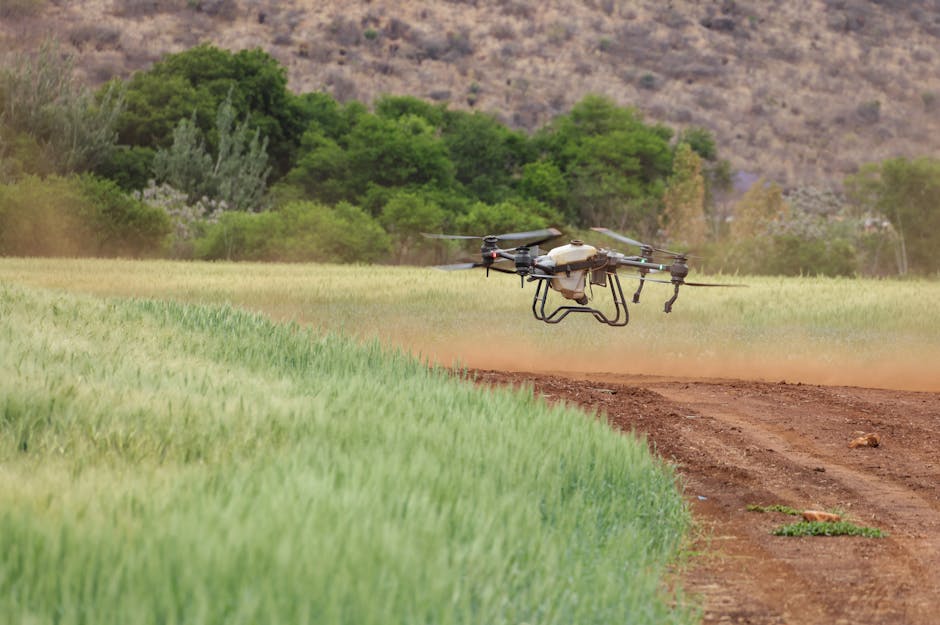
Een drone die boven een landbouwveld vliegt, met gewassen in het zicht, symboliseert technologische innovatie in de landbouw.

The agricultural sector has witnessed a revolutionary transformation with the advent of drone technology. From enhancing crop monitoring to optimizing resource use, the integration of drones has provided farmers and agribusinesses with tools that increase productivity and sustainability. One of the key trends shaping modern agriculture is deploying drones in the agricultural sector, which has opened new avenues for precision farming and data-driven decision-making.

Advancements in Agricultural Surveillance Drones

Surveillance drones equipped with high-resolution cameras and multispectral sensors are now fundamental in monitoring crop health and detecting early signs of disease or pest infestation. These drones provide farmers with real-time aerial imagery that helps assess plant vitality, soil condition, and water distribution. Unlike traditional methods that require time-consuming field inspections, surveillance drones offer rapid, accurate data collection over vast areas.

  • Crop health monitoring through multispectral imaging
  • Early detection of pest and disease outbreaks
  • Assessment of irrigation efficiency and soil moisture levels
  • Mapping of field variability for precision application of inputs

Understanding UAV vs Drone in Agricultural Applications

While the terms UAV (Unmanned Aerial Vehicle) and drone are often used interchangeably, there are subtle distinctions important in agriculture. UAVs often refer to more specialized or commercial-grade aircraft used for complex agricultural tasks, whereas drones can encompass a broader range of devices, including consumer models. This distinction is important when selecting the appropriate technology for specific agricultural operations, such as detailed crop surveying or routine field inspections.

Commercial Drones Enhancing Farm Management

Commercial drones have become indispensable tools for large-scale farming operations. By integrating GPS technology and advanced sensors, they enable precise application of fertilizers, pesticides, and herbicides, reducing waste and environmental impact. Notably, commercial UAV builder Acecore Technologies has been at the forefront of developing robust drones tailored for demanding agricultural environments. Their products combine durability with advanced functionality, supporting a wide range of agricultural management activities.

Drone Inspection and Utility Inspection in Agriculture

Drone inspection capabilities extend beyond crop monitoring to include infrastructure assessment on farms. Agricultural operations often require inspection of irrigation systems, fences, and storage facilities. Drones offer a safe and efficient way to perform these inspections, reducing labor costs and improving safety by avoiding manual checks in hard-to-reach or hazardous areas.

  • Regular inspection of irrigation pipelines and pumps
  • Monitoring structural integrity of greenhouses and silos
  • Identifying potential issues in fencing or boundary markers
  • Rapid assessment after storms or natural events

Enhancing Drone Security in Agricultural Operations

With the increasing reliance on drones for critical agricultural tasks, drone security has become a priority. Protecting drone data and ensuring the safe operation of UAVs is vital to prevent unauthorized access or interference. Implementing secure communication protocols, encrypted data transmission, and robust operational controls helps maintain the integrity of agricultural drone deployments and safeguards sensitive farm data.

Future Horizons: Integrating Drone Utility with Smart Farming

The future of agriculture is closely linked to the evolution of drone technology, combining drone utility inspection and data analytics within smart farming frameworks. As drones become smarter and more autonomous, they will integrate seamlessly with IoT devices, AI-powered analytics, and automated farm machinery. This integration promises to revolutionize agriculture by enabling predictive maintenance, optimized resource allocation, and improved crop yields, ensuring food security and sustainability for the growing global population.