
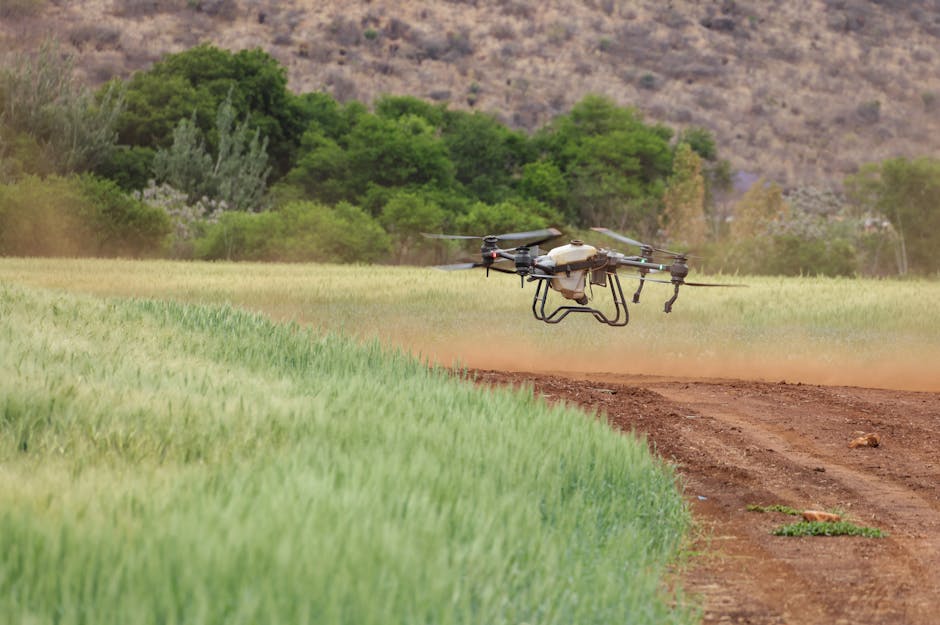
The agricultural sector has witnessed a revolutionary transformation with the advent of drone technology. From enhancing crop monitoring to optimizing resource use, the integration of drones has provided farmers and agribusinesses with tools that increase productivity and sustainability. One of the key trends shaping modern agriculture is deploying drones in the agricultural sector, which has opened new avenues for precision farming and data-driven decision-making.
Advancements in Agricultural Surveillance Drones
Surveillance drones equipped with high-resolution cameras and multispectral sensors are now fundamental in monitoring crop health and detecting early signs of disease or pest infestation. These drones provide farmers with real-time aerial imagery that helps assess plant vitality, soil condition, and water distribution. Unlike traditional methods that require time-consuming field inspections, surveillance drones offer rapid, accurate data collection over vast areas.
- Crop health monitoring through multispectral imaging
- Early detection of pest and disease outbreaks
- Assessment of irrigation efficiency and soil moisture levels
- Mapping of field variability for precision application of inputs
Understanding UAV vs Drone in Agricultural Applications
While the terms UAV (Unmanned Aerial Vehicle) and drone are often used interchangeably, there are subtle distinctions important in agriculture. UAVs often refer to more specialized or commercial-grade aircraft used for complex agricultural tasks, whereas drones can encompass a broader range of devices, including consumer models. This distinction is important when selecting the appropriate technology for specific agricultural operations, such as detailed crop surveying or routine field inspections.
Commercial Drones Enhancing Farm Management
Commercial drones have become indispensable tools for large-scale farming operations. By integrating GPS technology and advanced sensors, they enable precise application of fertilizers, pesticides, and herbicides, reducing waste and environmental impact. Notably, commercial UAV builder Acecore Technologies has been at the forefront of developing robust drones tailored for demanding agricultural environments. Their products combine durability with advanced functionality, supporting a wide range of agricultural management activities.
Drone Inspection and Utility Inspection in Agriculture
Drone inspection capabilities extend beyond crop monitoring to include infrastructure assessment on farms. Agricultural operations often require inspection of irrigation systems, fences, and storage facilities. Drones offer a safe and efficient way to perform these inspections, reducing labor costs and improving safety by avoiding manual checks in hard-to-reach or hazardous areas.
- Regular inspection of irrigation pipelines and pumps
- Monitoring structural integrity of greenhouses and silos
- Identifying potential issues in fencing or boundary markers
- Rapid assessment after storms or natural events
Enhancing Drone Security in Agricultural Operations
With the increasing reliance on drones for critical agricultural tasks, drone security has become a priority. Protecting drone data and ensuring the safe operation of UAVs is vital to prevent unauthorized access or interference. Implementing secure communication protocols, encrypted data transmission, and robust operational controls helps maintain the integrity of agricultural drone deployments and safeguards sensitive farm data.
Future Horizons: Integrating Drone Utility with Smart Farming
The future of agriculture is closely linked to the evolution of drone technology, combining drone utility inspection and data analytics within smart farming frameworks. As drones become smarter and more autonomous, they will integrate seamlessly with IoT devices, AI-powered analytics, and automated farm machinery. This integration promises to revolutionize agriculture by enabling predictive maintenance, optimized resource allocation, and improved crop yields, ensuring food security and sustainability for the growing global population.